.png)
Tattoo Removal Laser: How Many Sessions, What It Costs, and Why the Laser Matters
Removing a tattoo is a gradual process. The number of treatments, total cost, and amount of fading depend on the tattoo and your skin, as well as the laser and its settings.
At Regency Healing MedSpa, a physician-owned practice, tattoo removal begins with a personalized evaluation. We use the Cynosure PicoSure Pro picosecond laser platform. A consultation can help you understand whether treatment may suit your tattoo and what results may be realistic.
How Many Tattoo Removal Sessions Will You Need?
Many tattoos need several treatments. A broad estimate is about 4 to 15 sessions, but your needs may fall outside that range. No responsible provider can determine an exact number without evaluating the tattoo and your skin.
Factors include:
Ink color: Black and dark blue often respond more readily. Green, red, yellow, and lighter shades may be more challenging.
Tattoo age: Older tattoos may have faded naturally, though age alone does not predict the result.
Size and ink density: Larger, darker, or densely layered designs may need more time and sessions.
Depth and application: Professional tattoos can be more deeply and evenly inked than some amateur tattoos.
Skin tone and tanning: Skin pigment affects how the laser can be used and what settings are appropriate. Recent tanning can raise the risk of skin reactions.
Tattoo location and individual healing: The body clears fragmented ink over time, and healing varies from person to person.
Treatments are usually spaced several weeks apart, often around six to eight weeks or longer, depending on your skin’s recovery and the provider’s recommendation. Waiting allows the area to heal and gives your body time to clear ink particles. More frequent sessions are not automatically better.
How Much Does Tattoo Removal Cost?
Tattoo removal costs vary with the tattoo’s size, colors, location, the number of sessions, and the technology used. Treatment is generally paid out of pocket; cosmetic tattoo removal is not usually covered by health insurance.
As a broad reference, not a quote, one clinical overview reports session costs in the range of roughly $300 to $1,000 in the United States. Actual prices vary widely by provider and location. Since treatment often involves multiple visits, ask for an estimate of both the per-session cost and the expected overall treatment plan.
Regency Healing MedSpa does not list a tattoo-removal price on its treatment pages. Your quote should follow an evaluation rather than relying on a general online estimate. Book an in-person consultation to discuss your tattoo, possible session range, and costs.
Why Does Laser Technology Matter?
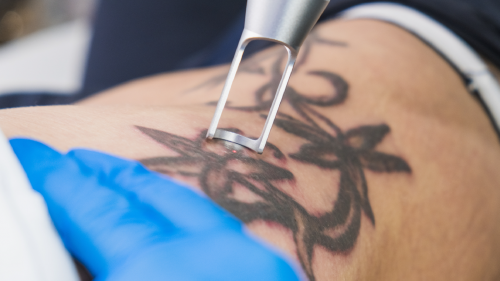
A tattoo removal laser delivers light energy that is absorbed by ink pigment. The energy breaks the pigment into smaller particles, which the body gradually clears. Different ink colors respond to different wavelengths, so matching the laser to the tattoo matters. The FDA explains that color, tattoo size, and other factors affect treatment.
Picosecond Versus Q-Switched Lasers
Traditional Q-switched lasers deliver energy in nanosecond pulses. Picosecond lasers deliver it in shorter picosecond pulses. This shorter pulse can break some ink into finer particles, which may help the body clear them. For suitable tattoos, picosecond technology may reduce the number of sessions compared with older approaches, but results depend on the ink, wavelength, settings, skin, and tattoo itself. It does not guarantee fewer treatments or complete removal.
Regency Healing MedSpa uses the Cynosure PicoSure Pro. Cynosure describes the platform’s 755-nm picosecond laser and optional 532-nm and 1064-nm wavelengths for tattoo removal. Which wavelengths are available and appropriate depends on the device configuration, ink colors, and individual assessment. Learn more about the PicoSure Pro platform.
A laser name alone does not determine an outcome. Your provider should consider tattoo pigment, skin tone, treatment history, and healing. The FDA notes that laser devices for tattoo removal are cleared for use by, or under the supervision of, a healthcare professional. Clearance is not a promise of complete removal or a guarantee against side effects.
What Does Laser Tattoo Removal Feel Like?
People often describe the sensation as a quick hot snap or a rubber-band flick against the skin. You may also feel warmth or stinging. The sensation and treatment time vary with the size and location of the tattoo.
Ask your provider about comfort options, such as cooling or an appropriate numbing method. During treatment, the skin may look temporarily white or “frosted.” Redness, swelling, tenderness, or small blisters can also occur. Follow the care instructions you receive, and contact your provider if you have concerns about how the area is healing.
What Should You Do After Treatment?
Aftercare supports healing and helps reduce the risk of unwanted skin changes. Follow the instructions provided for your treatment. General guidance may include:
Keep the area clean and follow instructions for any dressing or ointment.
Avoid picking at blisters, scabs, or flaking skin.
Keep treated skin out of direct sun while it heals.
Once the skin has healed, use sun protection and keep the area covered when practical.
Avoid another session until your provider confirms the skin is ready.
Sun exposure and tanning can increase the chance of burns or changes in skin color. The American Academy of Dermatology’s recovery guidance recommends protecting treated skin from the sun. Ask your provider how long to keep the area covered and when sunscreen is appropriate.
Should You Expect Fading or Full Removal?
Some people seek complete removal; others want a tattoo faded before a cover-up. Both goals are worth discussing. Complete removal may take many treatments and is not always possible. Some pigments are harder to treat, and a tattoo can leave behind faint ink or changes in skin color. Scarring and infection are possible risks.
A consultation helps set a goal that fits the tattoo and your preferences. Bring details about when and where the tattoo was done, previous removal treatments, and any past skin reactions. Regency Healing MedSpa’s treatment information and in-person consultation page can help you get started.
Tattoo Removal Laser FAQs
Can a tattoo be removed in one session?
Usually not. Most tattoos require multiple sessions, with time between treatments for healing and ink clearance. Your provider can offer a more useful estimate after examining the tattoo.
Are some tattoo colors harder to remove?
Yes. Black and dark blue often respond more readily, while green, red, yellow, and some lighter pigments can be more difficult. Cosmetic, white, or flesh-colored pigments can react unpredictably. Your provider may recommend a test spot for certain pigments.
Is picosecond technology always better than Q-switched?
Not for every tattoo. Picosecond pulses may break down some pigments into finer particles and may reduce sessions in suitable cases. Results depend on the ink, wavelength, skin, and treatment plan.
Does laser tattoo removal hurt?
It can feel like a quick snap or sting. Comfort measures may be available. Ask your provider what options are appropriate for you.
Can I go in the sun between sessions?
Protect the treated area from direct sun, especially while it heals. Tanning can affect treatment safety. Ask your provider when to resume sunscreen and other normal skin care.
How do I get a price estimate?
The most useful estimate follows an evaluation of your tattoo and treatment goals. Schedule a consultation with Regency Healing MedSpa to ask about your options, session range, and cost.

Comments